
Repair Damaged Teeth. Replace Missing Teeth. Restore Your Smile.
Dental Implants in Encinitas, CA
A damaged or missing tooth can affect much more than appearance. It may change how comfortably you chew, alter your bite, make neighboring teeth more vulnerable, or allow an existing dental problem to become more complicated.
At Encinitas Dental Wellness, restorative dentistry focuses on preserving natural teeth whenever practical, rebuilding teeth that have been damaged, and replacing teeth that can no longer be saved or are already missing.
Our restorative services include tooth-colored composite fillings, porcelain inlays and onlays, dental crowns, CEREC same-day restorations, dental bridges, and dentures. The right solution depends on how much healthy tooth structure remains, where the tooth is located, the forces placed on it, and your overall oral health.

Not Every Damaged Tooth Needs the Same Treatment
Restoring a Tooth Starts With Understanding the Problem
A small area of decay and a severely fractured tooth shouldn't receive the same restoration. One of the most important decisions in restorative dentistry is determining how much treatment the tooth actually needs.
When possible, we want to preserve healthy natural tooth structure. A relatively small cavity may be restored with a composite filling. A tooth with more substantial damage may benefit from an inlay, onlay, or crown. When a tooth is missing altogether, treatment shifts from repairing a tooth to replacing it.
Digital Dentistry Designed Around Convenience
CEREC Same-Day Restorations
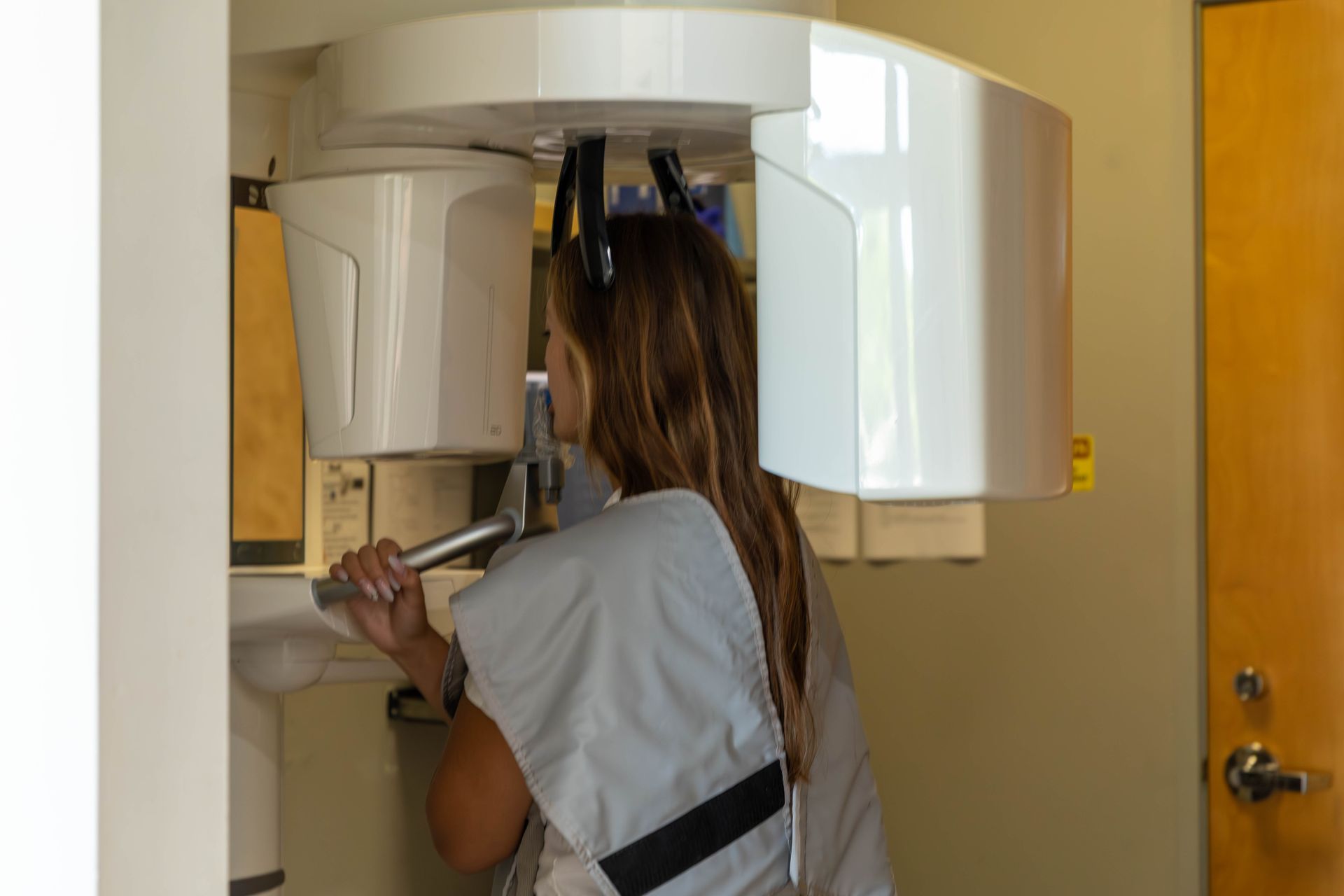
Some restorative treatment can be completed using CEREC digital dentistry, allowing appropriate restorations to be designed and fabricated in the dental office. Traditional crown treatment often involves an impression, a temporary restoration, an outside dental laboratory, and a return appointment for placement. For appropriate cases, CEREC technology can streamline that process. Digital scanning captures information about the prepared tooth. The restoration can then be digitally designed and fabricated before being evaluated, adjusted, and bonded into place.
Depending on the individual case, CEREC may be used for restorations such as
- Dental crowns
- Porcelain inlays
- Porcelain onlays
- Certain other ceramic restorations
Same-Day Doesn't Mean Rushed
The advantage of CEREC isn't simply speed.
Digital restorative dentistry allows us to combine diagnosis, tooth preparation, digital design, fabrication, and placement within an integrated workflow for appropriate cases.
Not every restoration or clinical situation is necessarily suited to same-day treatment. We determine whether CEREC is appropriate based on the tooth being restored and the requirements of the case.
How Much Restoration Does a Tooth Need?
Filling vs. Inlay or Onlay vs. Crown
One of the most common questions in restorative dentistry is why one tooth needs a filling while another needs a crown.
The difference largely comes down to how much healthy tooth structure remains and how much support the tooth requires.
Composite Filling
Generally used when the affected area is relatively limited and enough strong natural tooth structure remains to support a direct restoration.
Porcelain Inlay
May be considered when the restoration needs to cover a larger internal portion of the chewing surface but does not need to cover the tooth's cusps extensively.
Porcelain Onlay
Provides greater coverage and can protect one or more weakened cusps while preserving portions of healthy tooth structure.
Dental Crown
Covers the visible portion of the tooth and may be appropriate when substantial structural damage or weakness makes a more conservative restoration insufficient.
Time for Your Dental Check-Up?
Restoring Function When Multiple Teeth Are Missing
When many or all teeth are missing, dentures can provide a removable solution for restoring the appearance and basic function of the smile. Dentures are individually planned around the patient's mouth rather than treated as a universal appliance.
Full Dentures
Full dentures replace an entire arch of missing teeth when no natural teeth remain in that arch.
Partial Dentures
Partial dentures replace multiple missing teeth while working around natural teeth that remain.
Denture Adjustments & Relines
The tissues supporting a denture can change over time. Adjustments or relining may sometimes improve fit and comfort as those changes occur.
Immediate Dentures
In certain treatment plans, a denture can be prepared for placement around the time remaining teeth are removed so the patient does not have to go through the initial healing period without teeth.
Dentures do not function exactly like natural teeth, and adapting to them can take time. Setting realistic expectations about fit, chewing, speech, maintenance, and future adjustments is an important part of treatment planning.
Saving a Tooth vs. Replacing It
Whenever practical, preserving a healthy or predictably restorable natural tooth is generally worth considering.
But preservation shouldn't mean repeatedly repairing a tooth that no longer has a reasonable restorative prognosis.
A severely fractured tooth, extensive decay, inadequate remaining structure, advanced periodontal support loss, or other complications can change what is realistically possible.
Our role is to help answer three important questions:
Can the tooth be restored?
What would be required to restore it?
Is restoring it a reasonable long-term choice compared with replacement?
Those questions allow patients to make decisions based on more than simply getting through the immediate problem.
What to Expect During a Composite Filling Visit
1. Examination & Diagnosis
We evaluate the affected tooth or missing-tooth area and discuss your symptoms, dental history, and concerns.
2. Diagnostic Imaging
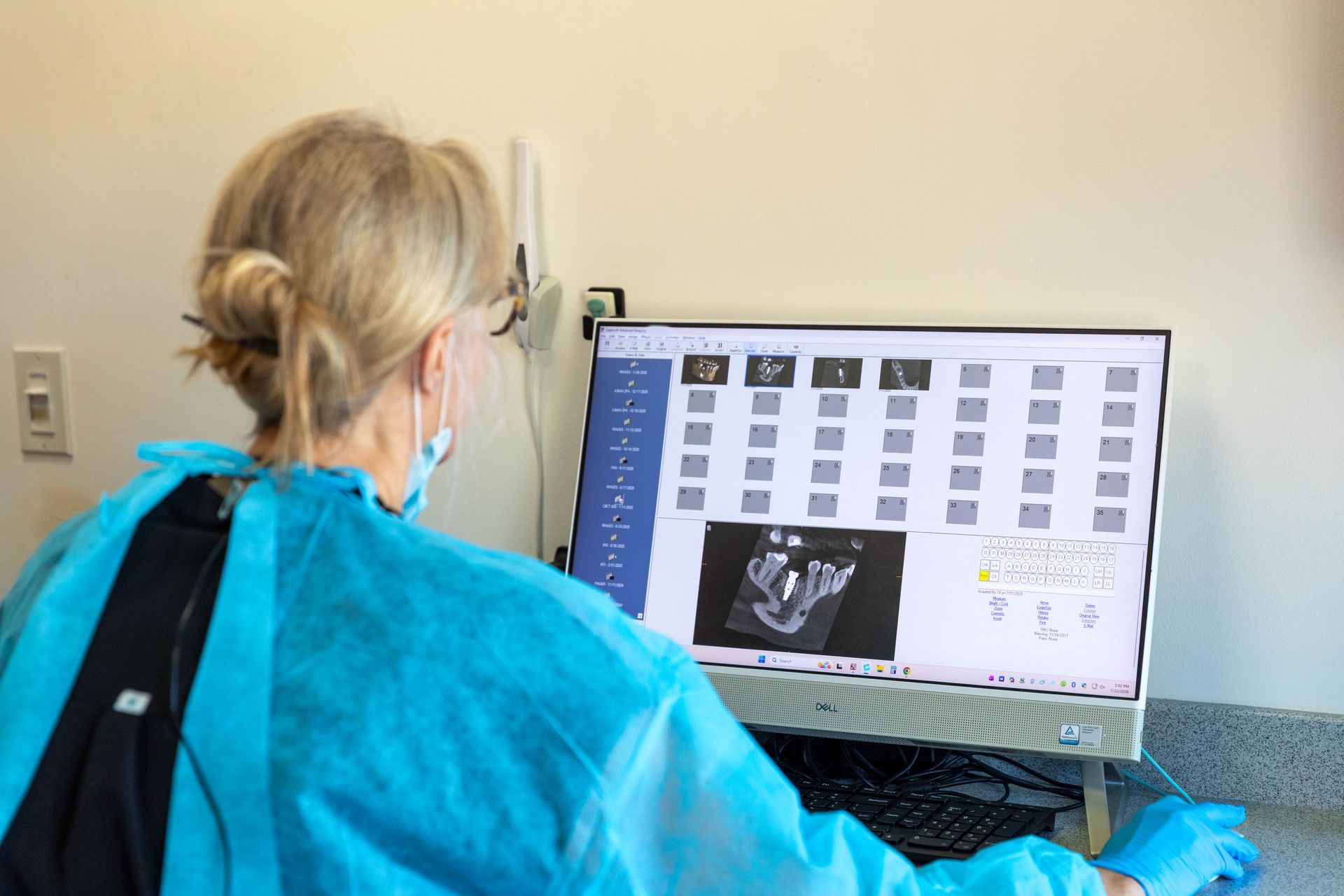
Dental X-rays or other diagnostic information may be used when appropriate to evaluate areas that cannot be fully assessed visually.
3. Treatment Recommendation
We explain what we find and discuss the restorative options appropriate for the condition.
4. Tooth Preparation or Treatment Planning
For a tooth-supported restoration, damaged or decayed areas are addressed and the tooth is prepared as required. Missing-tooth treatment involves planning the appropriate replacement.
5. Restoration Fabrication & Placement
Depending on the treatment, a restoration may be placed directly, fabricated using CEREC technology, or completed through another restorative workflow.
6. Bite & Fit Evaluation
We evaluate the restoration's fit, contacts, and bite and make adjustments when necessary.
7. Ongoing Care
Restored teeth and replacement teeth still require routine dental care. We monitor restorations during future examinations and recommend maintenance based on the treatment you've received.
Comprehensive Care for Your Dental Health
Signs You May Need Restorative Dental Care
Consider scheduling an evaluation if you notice:
- Tooth pain or sensitivity
- A visible cavity
- A chipped or fractured tooth
- A filling that feels loose or has fallen out
- A cracked or damaged crown
- Pain when biting or chewing
- Food repeatedly becoming trapped around a tooth
- Significant tooth wear
- A missing tooth
- Difficulty chewing because multiple teeth are missing
- A denture that no longer fits comfortably
- Changes around existing dental work
Restorative treatment often connects with other areas of dentistry.
General Dentistry: Routine examinations and diagnostic imaging can identify decay, damaged restorations, and other changes before they become more extensive.
Root Canal Therapy: If infection or inflammation affects the tissue inside a tooth, root canal treatment may be required before the tooth receives its final restoration.
Dental Implants: Implants may provide another option for replacing individual or multiple missing teeth.
Cosmetic Dentistry: Restorative and cosmetic goals sometimes overlap, particularly when treatment involves teeth that are visible when you smile.
Restorative Dentistry and Your Complete Dental Care
Why Choose Encinitas Dental Wellness for Restorative Dentistry?
Treatment Based on the Tooth: We evaluate how much healthy structure remains and recommend the level of restoration appropriate for the individual situation.
Conservative Options When Appropriate: A crown isn't automatically necessary because a tooth is damaged. When appropriate, fillings, inlays, or onlays may preserve more natural tooth structure.
Natural-Looking Restorations: Tooth-colored materials and carefully planned restorations allow us to consider function and appearance together.
Clear Treatment Discussions: When more than one reasonable option exists, we explain the differences, limitations, and treatment considerations so you can make an informed decision.

Frequently Asked Questions
What is restorative dentistry?
Restorative dentistry focuses on repairing damaged or decayed teeth and replacing teeth that are missing. Treatments can range from relatively small fillings to crowns, bridges, dentures, and other tooth-replacement options.
How do I know if I need a filling or a crown?
The recommendation depends largely on the amount and location of damaged tooth structure. Smaller areas may be restored with a filling, while substantially weakened teeth may require greater coverage and protection.
What is the difference between a filling and an inlay or onlay?
A composite filling is placed directly into the prepared tooth. Inlays and onlays are fabricated restorations that can provide additional coverage for teeth requiring more support while potentially preserving more natural structure than a full crown.
When is a crown necessary?
A crown may be recommended when a tooth has extensive decay, fracture, a very large existing restoration, substantial structural weakness, or another condition that makes a more conservative restoration insufficient.
What is a CEREC crown?
CEREC is a digital restorative system that allows certain ceramic restorations to be digitally designed and fabricated in the dental office. Appropriate crown cases may therefore be completed without the traditional laboratory workflow.
Can a crown really be completed in one visit?
Certain CEREC restorations may be completed during a single appointment when the clinical situation is appropriate. Not every crown or restorative case is necessarily suited to same-day treatment.
What happens if a tooth cannot be saved?
If a tooth cannot be predictably restored, we can discuss the appropriate next steps and options for replacing the missing tooth after removal.
Is a bridge better than a dental implant?
Neither is universally better. A bridge and an implant replace missing teeth differently and have different implications for neighboring teeth, treatment time, surgery, maintenance, and cost. The appropriate choice depends on the individual case.
What is the difference between a partial and full denture?
A full denture replaces an entire arch of missing teeth. A partial denture replaces several missing teeth while natural teeth remain elsewhere in the arch.
Are dentures removable?
Traditional full and partial dentures are removable by the patient. Implant-supported tooth-replacement options can work differently depending on the restoration selected.
How long do dental restorations last?
There is no single lifespan for every restoration. Longevity depends on the restoration type and material, tooth condition, bite forces, oral hygiene, diet, habits such as grinding or clenching, and ongoing dental care.
Can an old metal filling be replaced with composite?
Sometimes. Whether replacement is appropriate depends on the condition of the existing filling and the remaining tooth structure. An intact restoration does not necessarily need to be replaced simply because of its material.
Can a broken tooth always be crowned?
No. The amount of remaining tooth structure, fracture location, condition of the root, periodontal support, and other factors determine whether a damaged tooth can be predictably restored.
Do restored teeth still get cavities?
Yes. A restoration repairs part of a tooth but does not make the remaining natural tooth immune to decay. Good oral hygiene and regular dental care remain important around fillings, crowns, bridges, and other restorations.
Find the Right Level of Treatment for Your Smile
You don't need to know whether you need a filling, crown, bridge, denture, or another restoration before making an appointment.
That's what the evaluation is for.
Encinitas Dental Wellness provides restorative dentistry for damaged, decayed, worn, and missing teeth, including composite fillings, porcelain inlays and onlays, dental crowns, CEREC same-day restorations, dental bridges, and dentures.
We'll evaluate the problem, explain what can reasonably be preserved, and discuss the restorative options appropriate for your oral health.